
Landscape Maintenance Services
Keep your investment looking top-notch all year round.
It has been estimated that 80% of the total cost of a garden over a 20-year lifespan is for maintenance. Sustainable maintenance practices help to greatly reduce maintenance costs. At Madrone Landscape, we focus on client care and sustainable maintenance. Our expert crews are trained to be detail-oriented, focusing on plant health, aesthetics, and the effective use of water. At Madrone, our services include:
Maintenance Request Form
Weekly Maintenance
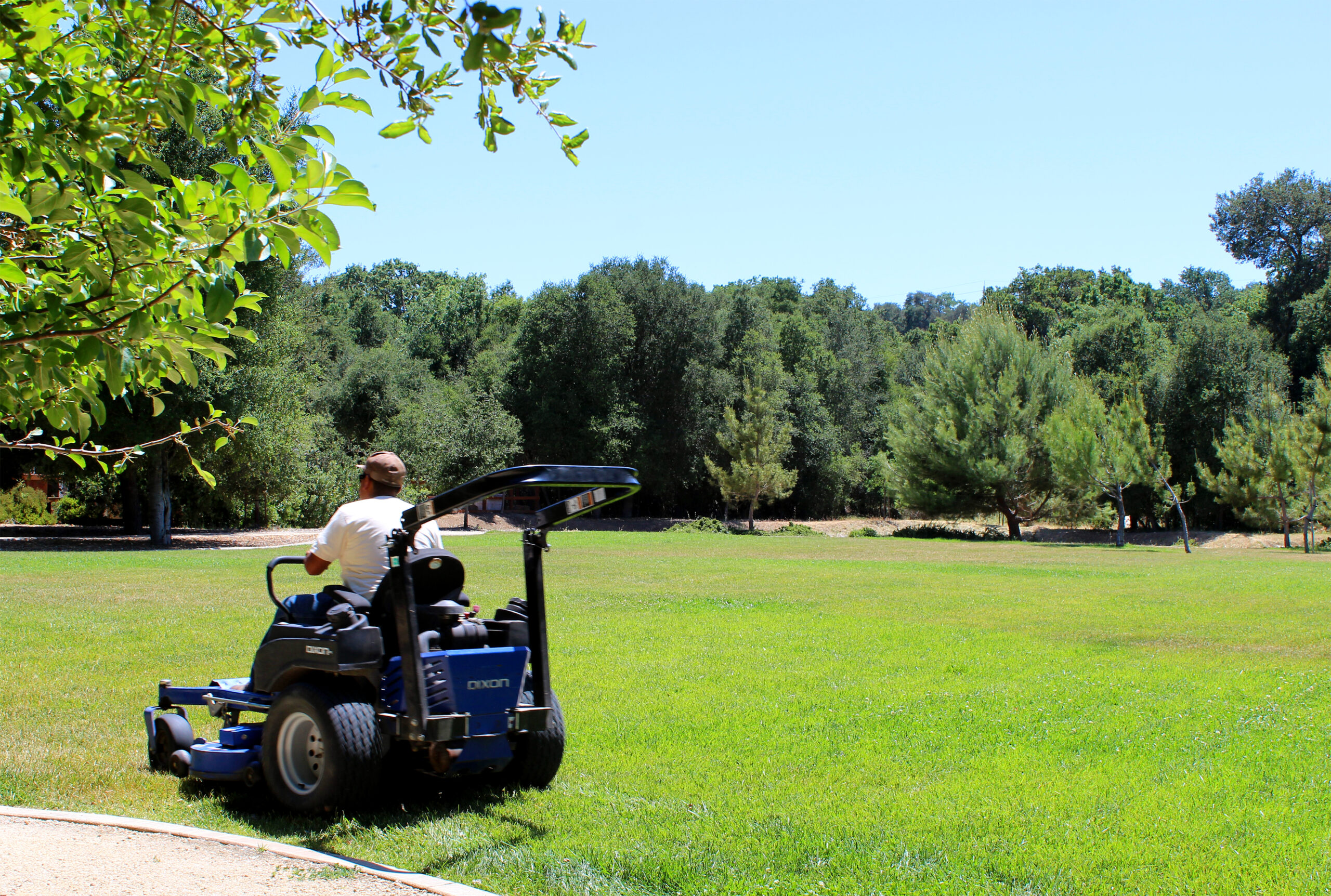
We offer weekly garden and yard maintenance services for residential properties, commercial properties, municipal properties, HOAs, and wineries in San Luis Obispo County. Weekly Maintenance services include lawn mowing, detailed pruning, blowing, trimming, and irrigation adjustment, for a flat monthly rate.
Garden Detail Maintenance
Not every garden fits within a weekly scheduled visit. Often the most elaborate and unique gardens require a more surgical approach to get the best results. We offer Garden Detail Maintenance services with an expert team to complete specialized maintenance at different intervals with variable labor needs throughout the year.
This service is generally reserved for large projects that need a team of professionals on call for seasonal maintenance, event preparation, and regular enhancement projects. We offer these time and materials services to estates in all of San Luis Obispo County, Northern Santa Barbara County, and Southern Monterey County.
Maintenance Client Add-On Services:
- Healthy Gardens
- Fertilization
- Mulch
- Planting
- Irrigation Repair
- Integrated Pest Management
Healthy Gardens
Healthy Gardens, our exclusive treatment program originating in 2013, uses organic fertilization, compost tea, and other methods to build soil and revitalize landscapes. We offer these services to maintenance clients as part of a calendared treatment.
Fertilization
In addition to our preferred organic Healthy Gardens treatments, our experts employ a variety of treatments to improve landscape health. All gardens and soils are different and we are there to solve problems and improve plant health.
Mulch
Topdressing a bed with a 2-3″ layer of chipped wood trimmings does wonders to the landscape. Not only does it provide a clean finished look but it also prevents evaporation, greatly improving the soil’s ability to store moisture. Mulch prevents weed seed germination, creates a barrier between sensitive root zones and harsh temperature swings, and supplies micro-organisms with surplus organic matter for the future. We recommend maintaining a layer of mulch in planters and our crew will install it when you need it.
Planting
Even with the best care, plants are perishable. We offer services to replace plants and replenish annual plantings as needed.
Irrigation Management and Repair
Once you’ve made an investment in an irrigation system, you’ll want to use your precious water resources wisely. Madrone Landscapes will routinely review your system, ensuring watering times and lengths are seasonally appropriate. Our experts can repair leaks or replace defective parts while watching for necessary system updates or upgrades.
Integrated Pest Management (IPM)
IPM is an ecosystem-based strategy that focuses on long-term prevention of pests. Using IPM, the experts at Madrone Landscapes look at the least toxic solutions first. We select and apply pest control materials and tactics in a manner that minimizes risks to human health, beneficial and nontarget organisms, and the environment. We control weeds through mulching, non-toxic herbicides, and manual removal; we control insect pests through beneficials, soaps and oils, and certain microbials.